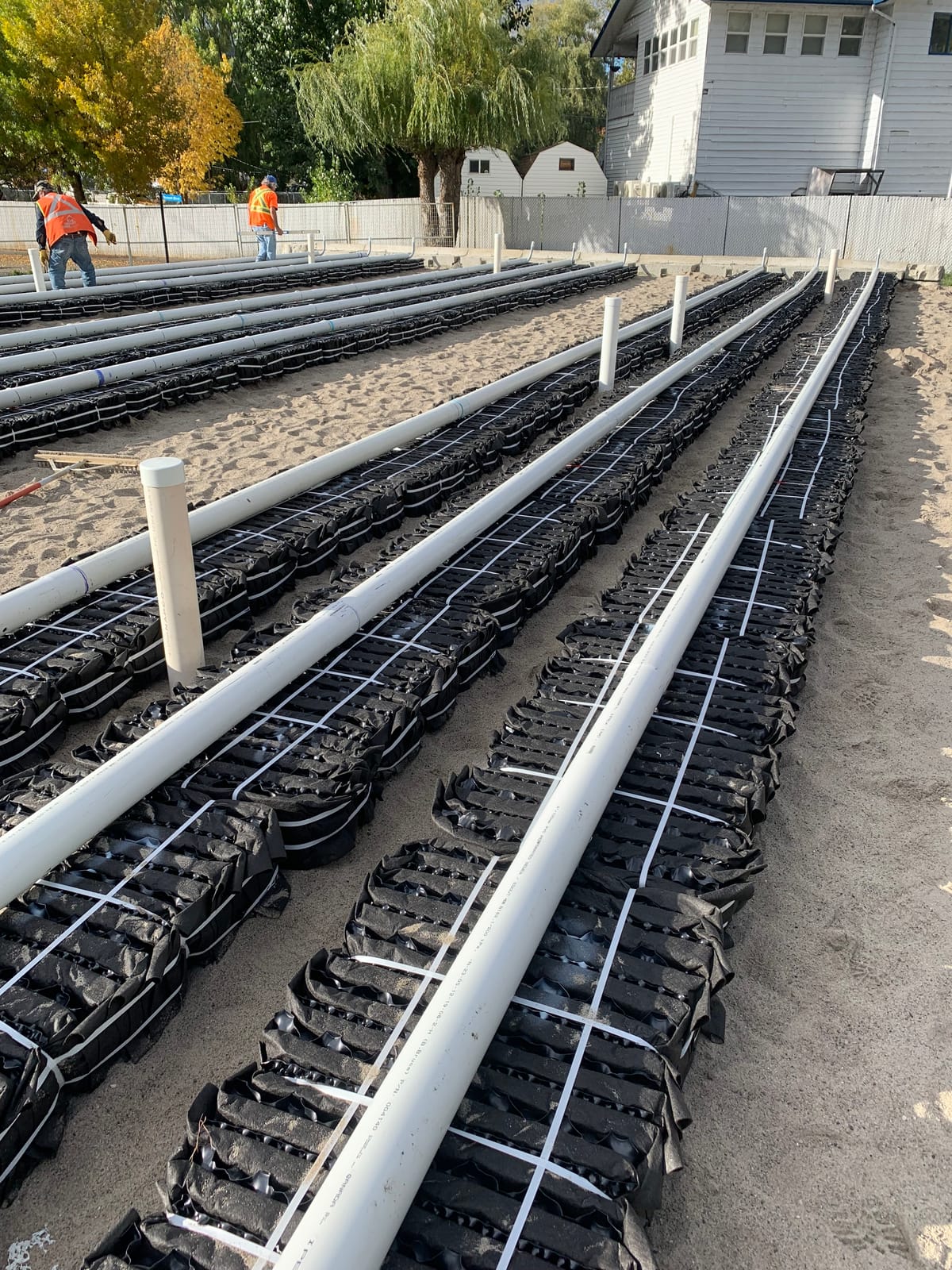
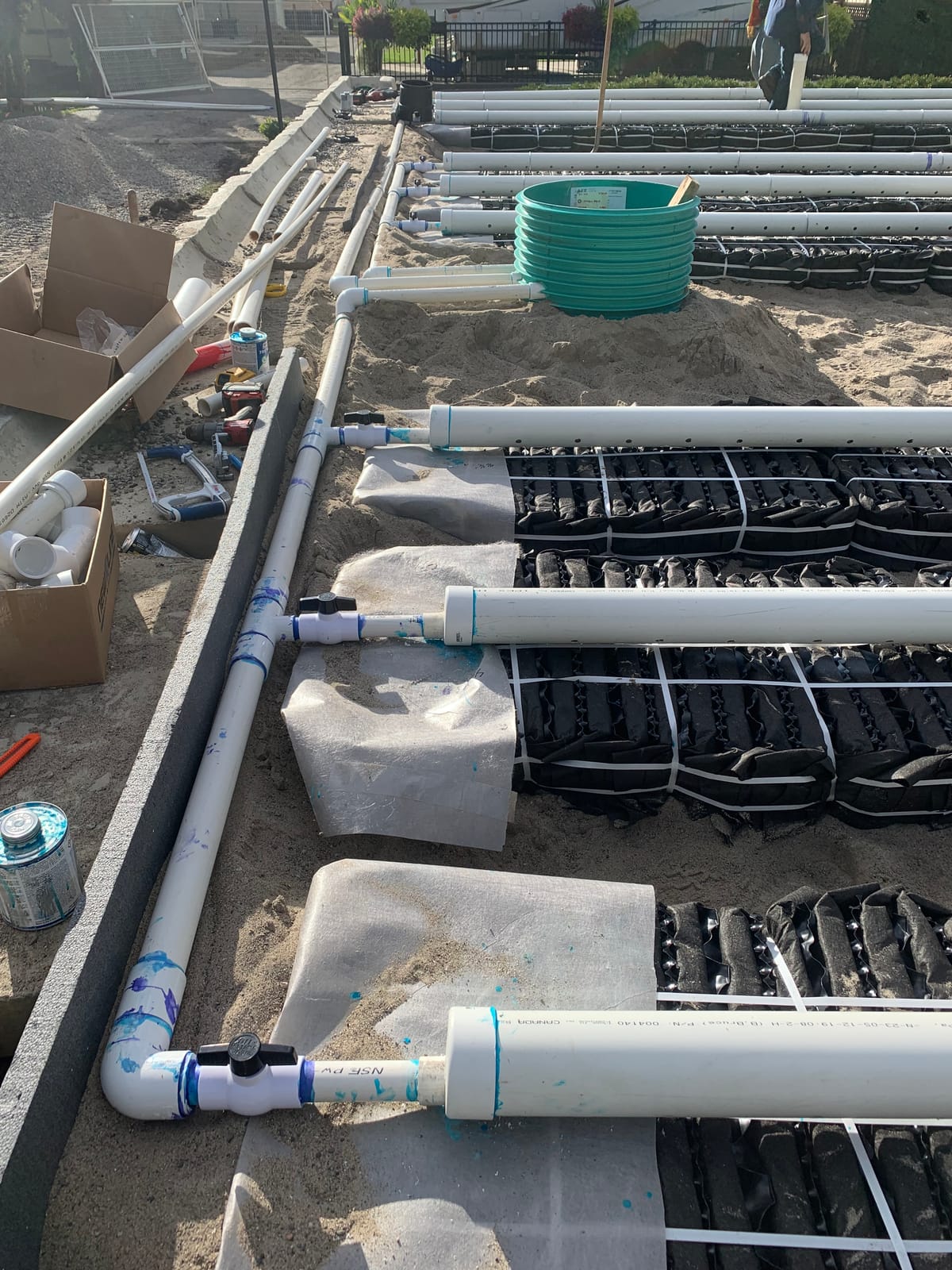
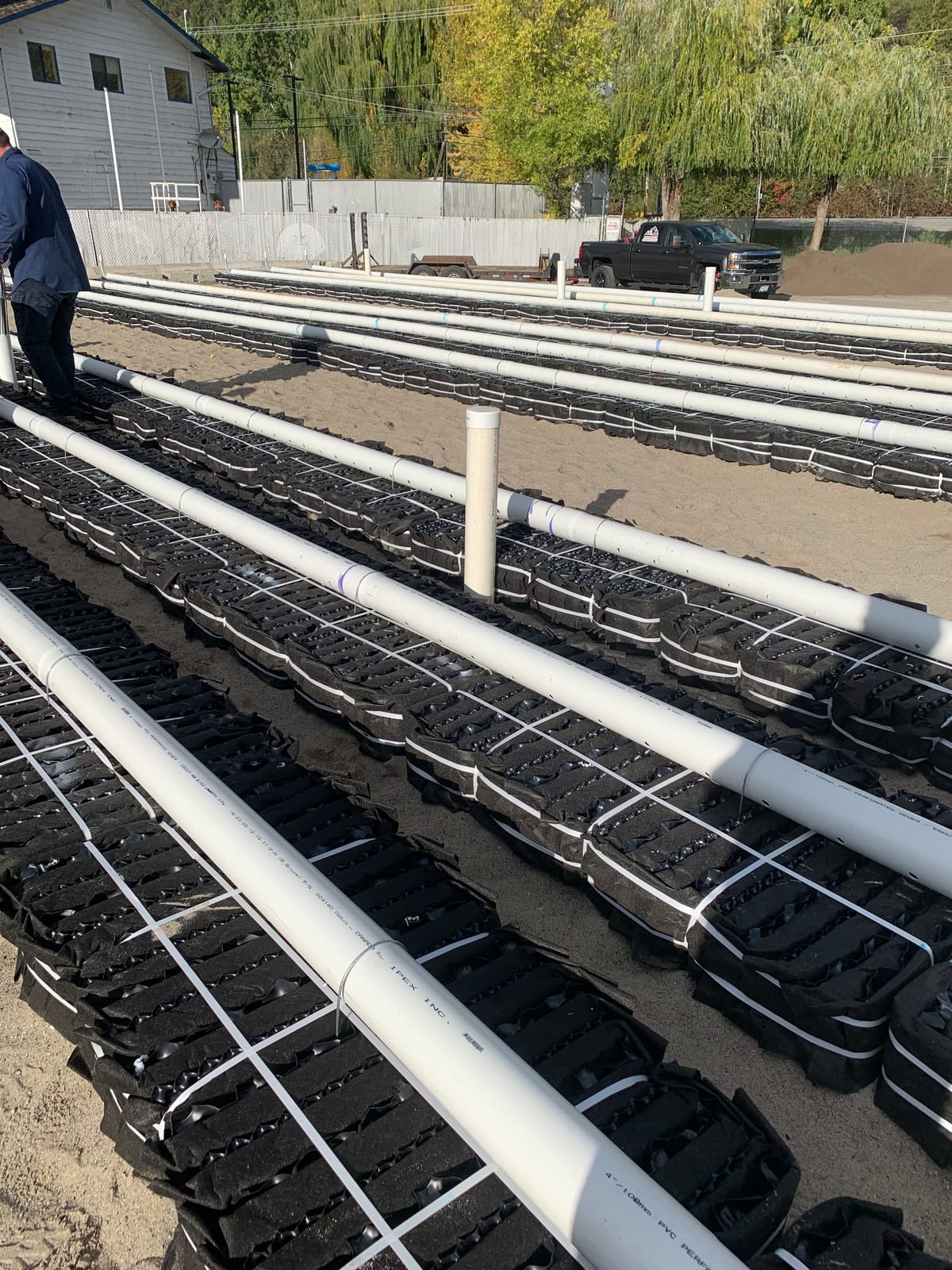
What is the difference between an engineered septic system and a regular system?
An engineered septic system is designed by a professional engineer or geoscientist for that one site. A regular system is designed to the province's Standard Practice Manual by a Registered Onsite Wastewater Practitioner, or ROWP.
"Engineered" is a trade word, not a term in the regulation. In practice it means the design carries a professional's seal, and it can go beyond what the manual covers. Both kinds are legal. The site, the soil and the treatment level decide which one a property needs.
What are the three types of septic systems in BC?
BC's Sewerage System Regulation sorts systems by how clean the effluent is when it leaves treatment: Type 1, Type 2 and Type 3.
Type 1 is treatment by a septic tank only. Type 2 treats the effluent to less than 45 mg/L of suspended solids and less than 45 mg/L of BOD. Type 3 treats it to less than 10 mg/L of each, and also limits fecal coliform.
Higher treatment lets a system work where the soil is shallow, the water table is high or the lot is tight. It also means more equipment, such as a treatment unit, pumps and controls.
When do you need an engineered septic system?
You need a professional's design when the system is Type 3, when the daily design flow is over 9,100 litres, or when the site falls outside the Standard Practice Manual.
The manual itself names complex sites, very severely constrained soils and unusual non-residential flows as outside its scope. A steep lot, rock close to the surface, a high seasonal water table, very coarse gravel or heavy clay can all push a property that way. Wells, creeks and lakes nearby also matter, because the manual sets minimum distances from the field and the tank.
Any owner can also choose a professional design on any site, even where a standard system would be allowed.
Septic system engineer or ROWP?
A ROWP can plan and install Type 1 and Type 2 systems under 9,100 litres a day, working to the Standard Practice Manual. A professional can design any type and any size the regulation covers.
Registered practitioners hold separate endorsements. A Planner assesses the site and designs the system. An Installer builds it to the Planner's or professional's plans. A Maintenance Provider looks after it afterwards.
Lost Creek Septic works with a partner engineering company. The engineers do the design, and Wes installs it, so you do not have to find and coordinate the two yourself.
From soil test to sign-off
Every system starts with a site and soil assessment. The designer digs test pits, reads the soil layers and checks how deep the unsaturated soil goes before rock or water. That sets the treatment type and the kind of field.
Next, the authorized person files the plans with the health authority before any construction. Around Creston that is Interior Health. It accepts the filing. It does not issue a permit the way a building department does.
Then the system is built to the plans. Within 30 days of finishing, the authorized person gives the owner the plans, a maintenance plan and a Letter of Certification, and files the same letter with the health authority.
From then on, the owner must maintain the system to that maintenance plan and keep records.
What are the regulations for septic systems in BC?
Septic systems in BC fall under the Sewerage System Regulation, made under the Public Health Act. It covers single homes, duplexes and any system under 22,700 litres a day.
Larger systems come under the Municipal Wastewater Regulation instead, and the Ministry of Environment deals with them. Holding tanks are a special case and need an actual permit from the health authority.